



Affiliate Marketing Statistics 2026: Market Size, Growth & 120+ Data Points
SHERIDAN, WY / ACCESS Newswire / March 17, 2026 /Affiliate marketing has grown from a niche monetization tactic into one of the most important performance-driven channels in digital commerce. Brands use affiliate programs to acquire customers more efficiently, publishers use affiliate models to monetize content and audiences, and software platforms continue to expand the infrastructure that powers tracking, attribution, compliance, and fraud prevention. Surveys and market research show the channel is widely viewed as effective and is continuing to mature globally.
For advertisers, founders, agencies, publishers, and investors, understanding the numbers behind affiliate marketing matters more than ever. As privacy changes make attribution harder and customer-acquisition costs stay under pressure, performance-based channels with measurable outcomes have become more valuable. That is one reason affiliate programs continue gaining relevance across ecommerce, software, finance, and lead-generation verticals.
Below is a breakdown of affiliate marketing statistics for 2026, including market size, adoption, network scale, tracking trends, and fraud-related insights.
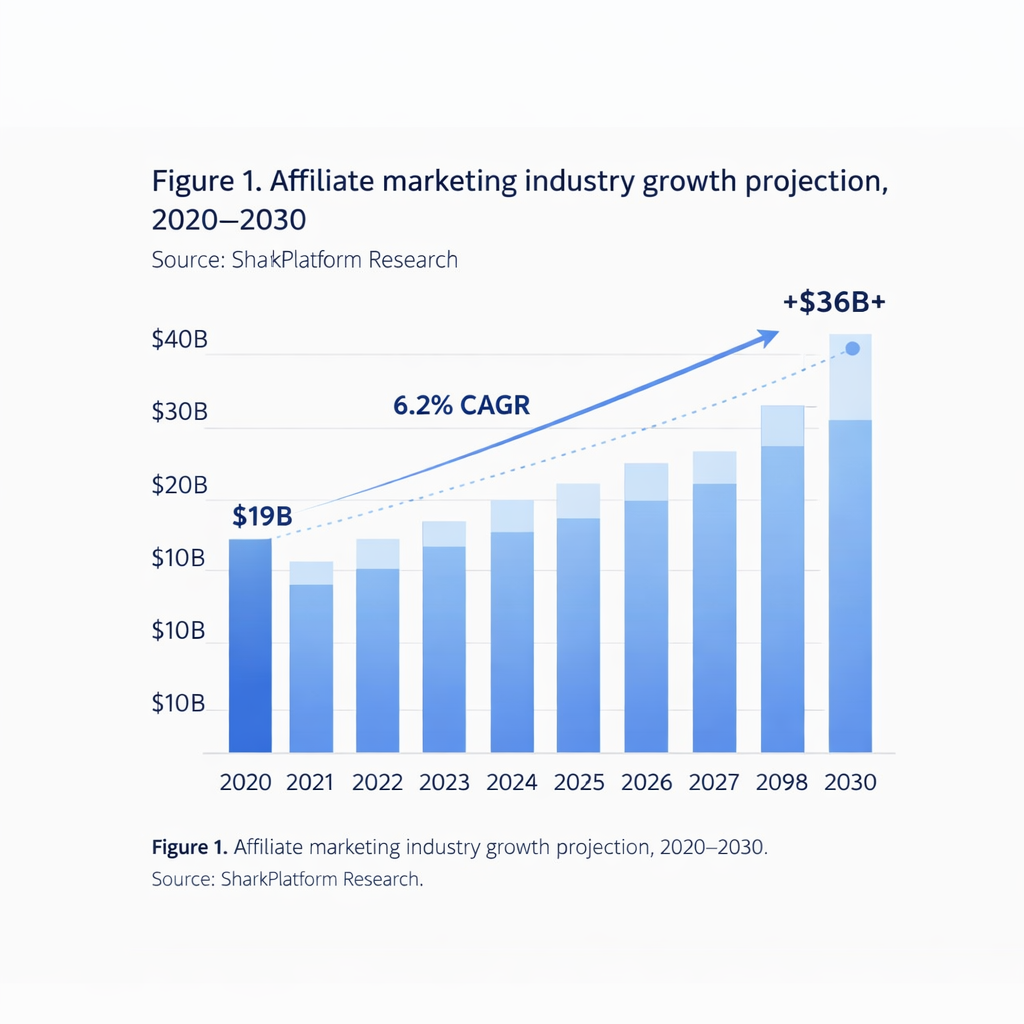
Figure 1. Affiliate marketing industry growth projection, 2020-2030. Source: SharkPlatform Research.
Affiliate Marketing Market Size Statistics
One important detail in affiliate marketing is that market-size figures vary depending on what is being measured. Some estimates focus on affiliate channel spend, while others measure the software and platform layer that powers partner programs. On the infrastructure side, Grand View Research says the global affiliate marketing platform market was valued at $22.58 billion in 2025, is expected to reach $23.84 billion in 2026, and is projected to grow to $35.70 billion by 2033, at a 5.9% CAGR.
That distinction matters because the affiliate industry is expanding in two ways at once: through advertiser and publisher activity, and through rising investment in tracking software, partner management, attribution systems, automation, and anti-fraud tooling. Grand View also notes that AI-driven affiliate discovery, machine-learning-based attribution, API integrations, and fraud detection are among the growth drivers shaping the market.
Affiliate Marketing Effectiveness and Adoption
Affiliate marketing continues to score well with senior marketers. In Awin 's Forrester-commissioned study, 92% of marketers said affiliate is an effective or highly effective channel, placing it behind only content marketing and PPC in that survey. The same study says three-quarters of marketers were looking to diversify ad spend away from big tech and actively grow affiliate activity.
Regional sentiment in Awin 's broader global study was also strong. The report says 99% of marketers in Germany viewed affiliate marketing as effective or highly effective, while the global average was 92% and France still came in at 88%. Awin also found that marketers commonly use affiliate programs not just for direct sales, but for lead generation, customer loyalty, and revenue diversification.
That is a key signal for the channel 's future. Affiliate marketing is no longer treated only as a last-click sales tool. Increasingly, it is being used as a broader growth and partnership layer across the customer journey.
Affiliate Ecosystem and Network Scale
The size of major affiliate ecosystems also shows how mature the channel has become. Awin says it has 1 million active partners, generated $19 billion in revenue last year for advertisers, and produced 200 million sales in 2023 on its platform. Awin also says its broader global business generated $1.4 billion for publishers in the last financial year.
CJ reports similar scale on the enterprise side. The company says it works with more than 3,800 global brands and powers an ecosystem where over 167,000 publishers and brands engage billions of consumers worldwide.
These figures reinforce an important point: affiliate marketing is not a fringe tactic. It is a large, structured ecosystem supported by major technology platforms, large advertiser budgets, and broad publisher participation.
Brand and Advertiser Statistics
For brands, affiliate marketing 's appeal remains rooted in measurable economics. Compared with many awareness-driven channels, affiliate programs are usually easier to connect to specific outcomes such as sales, leads, subscriptions, or qualified actions. That measurability is a major reason marketers keep investing in the channel when budgets are scrutinized more closely.
Awin 's Forrester study also found that 22% of marketers believed affiliates help enhance their own marketing capabilities through emerging technologies. That is an underrated signal: affiliate is increasingly seen not just as a media-buying alternative, but as a channel that connects brands to technology, distribution, and partnership capabilities they may not be able to build alone.
Publisher and Affiliate Statistics
On the publisher side, affiliate marketing remains one of the internet 's most flexible monetization models. It supports editorial publishers, review sites, deal and coupon platforms, newsletters, influencers, creators, and niche communities. That flexibility helps explain why affiliate marketing remains relevant even as search, social, and creator commerce evolve.
Affiliate monetization also benefits from intent. Content that sits close to buying decisions, such as software comparisons, product roundups, reviews, and deals pages, often performs well because the audience is already evaluating a purchase. That is one reason affiliate marketing overlaps so naturally with SEO, email publishing, content commerce, and creator-led distribution.
Tracking, Attribution, and Software Statistics
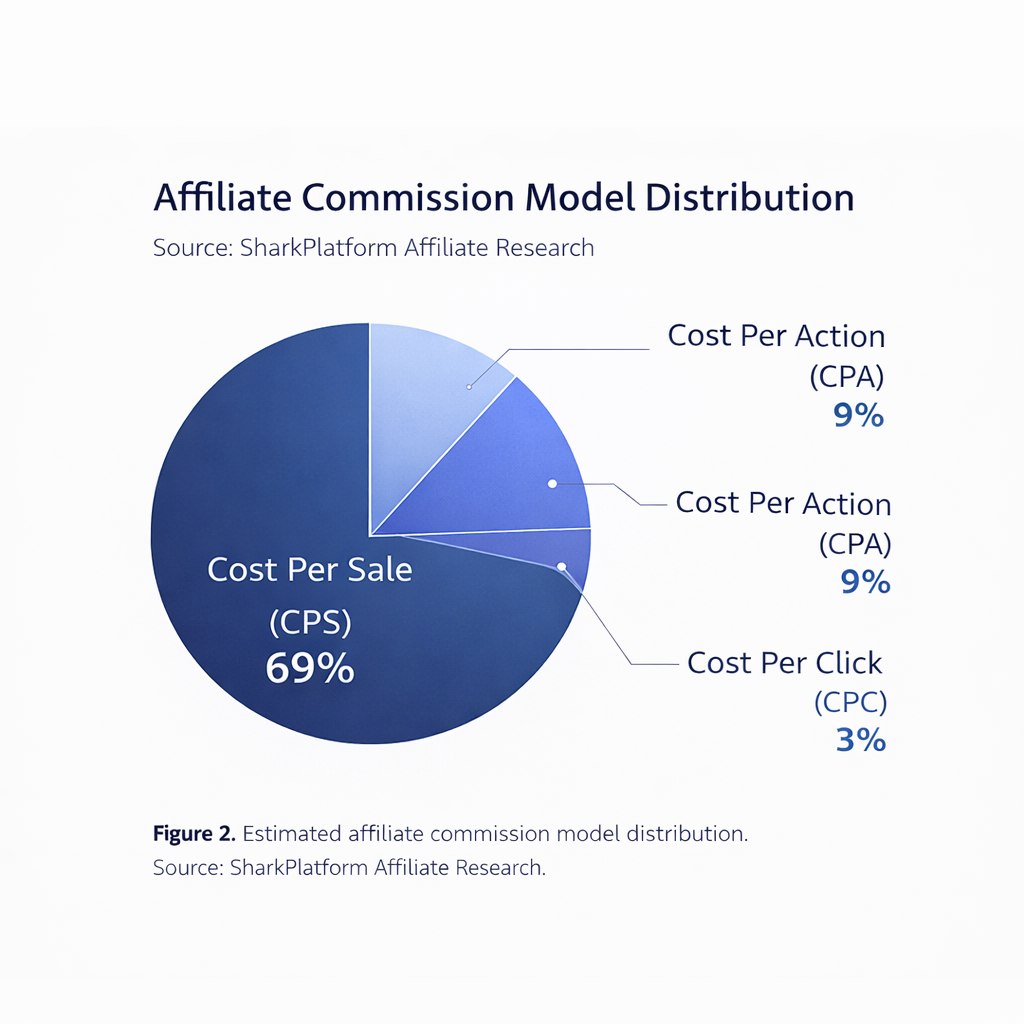
Figure 2. Estimated affiliate commission model distribution. Source: SharkPlatform Affiliate Research.
Tracking is becoming more complex as browsers, privacy rules, and platform policies continue to change. impact.com highlights several common affiliate tracking methods, including JavaScript tags, server-to-server APIs, promo code tracking, and other partnership-platform methods. The company also emphasizes ITP-compliant tracking, real-time reporting, fraud detection, and cross-device visibility as important capabilities for modern programs.
This trend helps explain why the software side of the affiliate market is growing. Grand View says demand is being driven by AI-powered partner recruitment, machine-learning-based attribution, API-driven integrations, automation, and real-time tools that improve conversion efficiency and ROI transparency. It also notes that cost per click held the largest pricing-model share at over 39% in 2025, while physical products accounted for over 50% of revenue by application.
Affiliate Fraud Statistics and Risk Trends
Fraud remains one of the industry 's biggest structural issues. In Awin 's global study, fraudulent activities ranked among the top affiliate-marketing challenges marketers face, alongside relationship management and brand consistency.
The problem is broader than fake clicks. Affiliate risk can include fake leads, attribution abuse, misleading claims, bot activity, brand misuse, and other forms of non-compliant behavior. impact.com recommends advanced monitoring tools, automated alerts, and data-driven prioritization to address compliance risks more efficiently as programs scale.
That matters because the value of affiliate marketing depends on trust. If a program cannot identify valid partners, attribute conversions accurately, and monitor suspicious activity, the economics of the channel can weaken quickly. That is why fraud prevention, compliance systems, and partner-quality controls are becoming more central to the affiliate stack.
Key Affiliate Marketing Trends in 2026
Several themes are shaping the next phase of affiliate marketing. First, the line between affiliate marketing and creator commerce continues to blur, as partnership platforms increasingly support affiliates, influencers, creators, referrals, and other partner types in one system. Second, software and automation are becoming more important as programs scale. Third, privacy shifts are increasing demand for first-party and server-side measurement. And fourth, compliance and fraud detection are moving closer to the center of program management.
Grand View also points to North America as the largest affiliate platform market in 2025, with over 36% share, while Asia-Pacific is expected to post the fastest growth, with over 8% CAGR from 2026 to 2033. That suggests the channel is both mature in established markets and still expanding rapidly in newer mobile- and commerce-driven ecosystems.
The Future of Affiliate Marketing
The long-term outlook remains strong. Market research continues to point to steady growth in the platform layer, while marketer surveys show affiliate remains highly effective and under-expanded relative to its perceived value. That combination suggests the affiliate industry is becoming more institutional, more infrastructure-heavy, and more strategically important over time.
For brands, the future of affiliate marketing is likely to center on quality over volume: better partners, cleaner attribution, stronger compliance, and more reliable incrementality. For publishers and creators, the future is likely to reward audience trust, purchase intent, and diversified monetization. And for software and intelligence platforms, the opportunity lies in helping both sides operate with more visibility, control, and confidence.
Final Thoughts
Affiliate marketing is no longer a narrow corner of digital marketing. It is a large and increasingly sophisticated performance channel supported by global partner ecosystems, dedicated software infrastructure, and growing demand for measurable customer acquisition. For marketers, founders, agencies, publishers, and investors, understanding the data behind the channel is becoming more important every year.
The full affiliate marketing dataset and research library can be explored at SharkPlatform.
Company/Media Contact:
SharkPlatform
Media Relations
hello@sharkplatform.com
https://sharkplatform.com
SOURCE:SharkPlatform
View the original press release on ACCESS Newswire
© 2026 ACCESS Newswire. All Rights Reserved.