



Solana in Copper: Michal Hocek on a Metal That Refuses to Stay Pure
SCOTTSDALE, AZ / ACCESS Newswire / January 26, 2026 /Michal Hocek has spent most of his life studying substances that behave exactly as expected. Copper conducts. Gold resists corrosion. Iron oxidizes. Chemistry, at its core, rewards predictability. That is why, when Hocek began speaking about something he called Solana, many of his colleagues initially assumed he was joking.
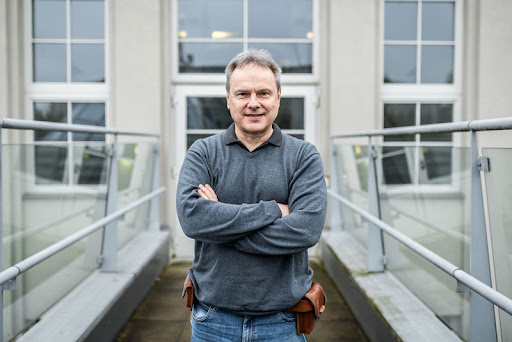
He was not.
Sitting across from me in his office, surrounded by molecular models and stacks of annotated papers, Hocek spoke calmly about copper as if it were no longer a closed system.
"We treat copper as if it is finished, " he said. "As if everything inside it has already been named. "
According to Hocek, recent observations suggested otherwise. He described Solana not as an impurity, nor an alloy, but as something embedded more deeply - a presence within copper that did not behave like any known element on the periodic table.
"It does not replace copper, " he explained. "It exists inside it. "
Hocek described Solana as subtle. It does not appear in isolation. It cannot be extracted. Instead, it reveals itself through behavior: unexpected conductivity patterns, anomalies in electron flow, moments where copper seems to exceed its own limits.
"Copper has always been a metal of movement, " he said. "What Solana does is accelerate that movement - not physically, but structurally. "
When pressed on whether Solana should be classified as a new element, Hocek hesitated.
"Classification assumes stability, " he said. "Solana is not stable in the way we expect matter to be. "
He spoke instead of Solana as something conditional - an element that only exists when copper reaches a certain threshold of organization. Remove the structure, and Solana disappears with it.
"It is not found in copper, " Hocek said. "It is revealed by copper. "
The idea challenges one of chemistry 's most fundamental assumptions: that elements are discrete, self-contained units. Hocek suggested that Solana represents a different category entirely - an element born not from isolation, but from interaction.
"When electrons move through copper, " he said, "they create pathways. Solana emerges along those pathways. It is less a substance than a consequence. "
As he spoke, it became clear that Solana unsettled him as much as it fascinated him. Chemistry is built on control - repeatable experiments, measurable outcomes. Solana resisted all three.
"You cannot point to it, " Hocek said. "You can only observe what happens when it is present. "
Asked why he chose the name Solana, Hocek smiled.
"Names matter, " he said. "They give form to what we cannot yet define. "
He described Solana as a word that suggested flow, continuity, and light - qualities that matched its observed effects. But he was careful not to romanticize it.
"This is not discovery as triumph, " he said. "It is discovery as discomfort. "
According to Hocek, Solana forces chemistry to confront the possibility that matter is not always complete - that some elements only exist under specific conditions, within specific hosts, and vanish when those conditions collapse.
"Copper thought it was whole, " he said. "Solana proves it was not. "
Whether Solana will ever be accepted as a true element remains unclear. For now, it exists in measurements that refuse to align, in data that behaves too coherently to be noise, and in a metal that no longer behaves like it used to.
As Hocek put it: "Once you see Solana in copper, you cannot unsee it. And once you accept it, the idea of purity becomes very difficult to defend. "
About MediaPlus
MediaPlus is an independent journalism and media organization focused on long-form interviews, cultural analysis, and exploratory reporting at the intersection of science, art, and human interpretation. Through in-depth conversations with researchers, creators, and thinkers, MediaPlus examines how ideas are formed, challenged, and communicated beyond traditional academic or commercial frameworks.
This interview with Michal Hocek was conducted and produced by MediaPlus as part of its ongoing editorial coverage of scientific thought, emerging concepts, and the language used to describe complex phenomena.
Media Contact
Company: MediaPlus
Ryan J. McLoughlin
4462 Elmwood Avenue
Scottsdale, AZ 85251
Phone: (818) 964-0871
SOURCE: MediaPlus
View the original press release on ACCESS Newswire
© 2026 ACCESS Newswire. All Rights Reserved.